Craft
The long time of a rug
Between the fleece of a Middle Atlas sheep and the rug laid in your living room lie weeks of patient gestures, handed down through generations. This is how our two rugs come to life.
01
Shearing
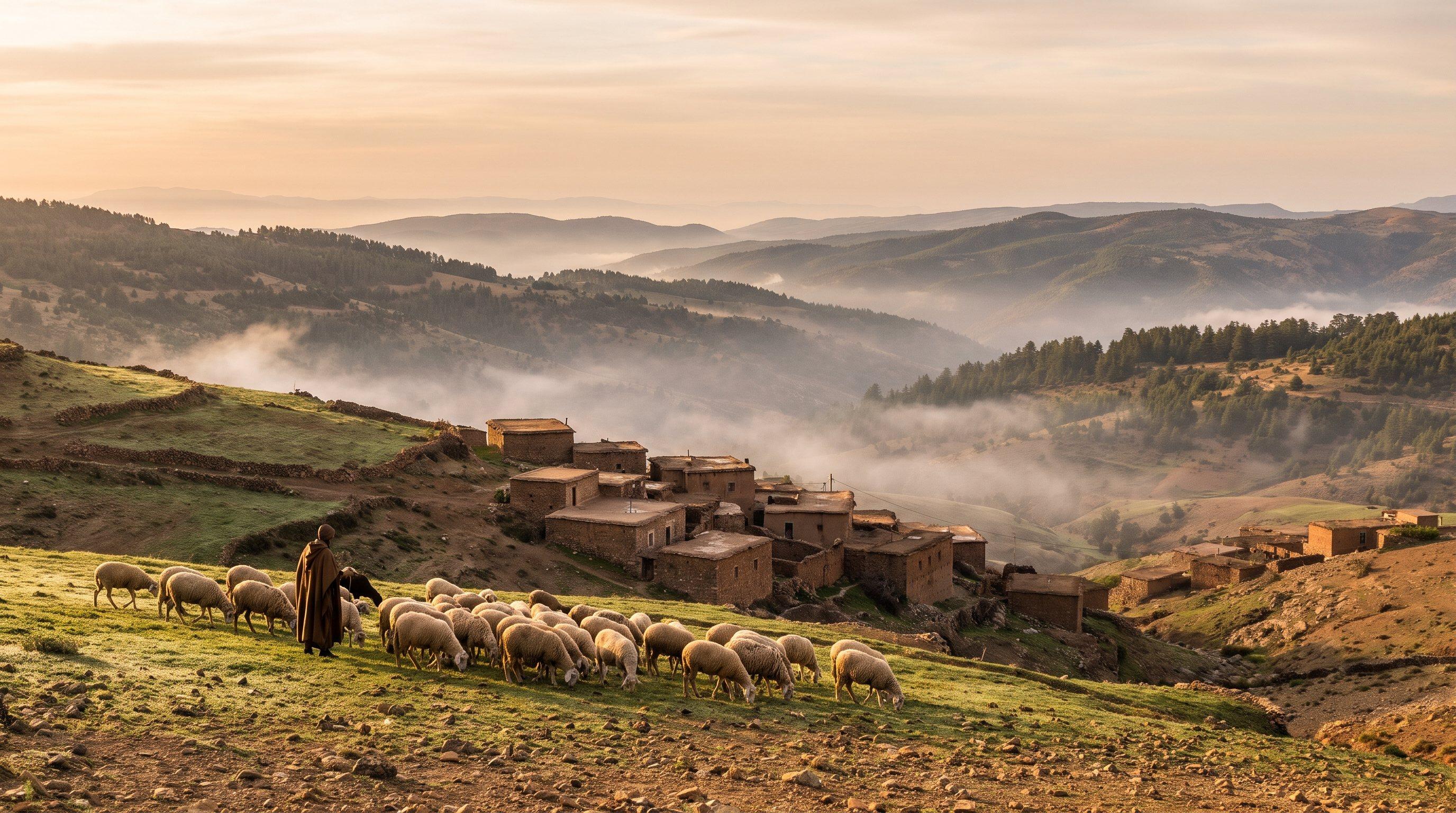
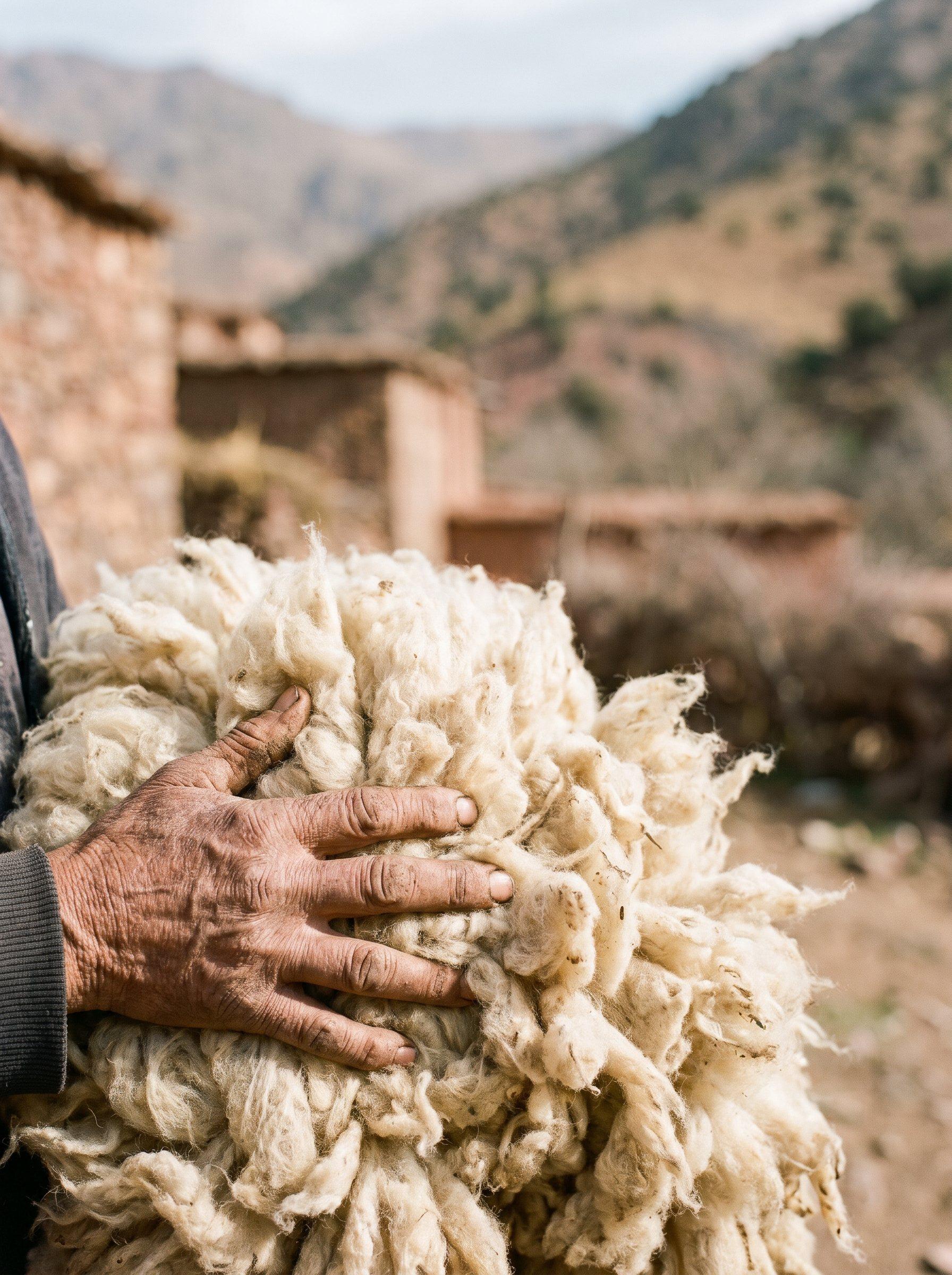
It all begins in spring, when the flocks of the high plateaus are shorn by hand. Atlas wool is long, dense and rich in lanolin: it is what gives the Beni Ourain its softness and loft.
The fleeces are sorted one by one. The whitest and longest are kept for the rugs.
02
Washing & carding
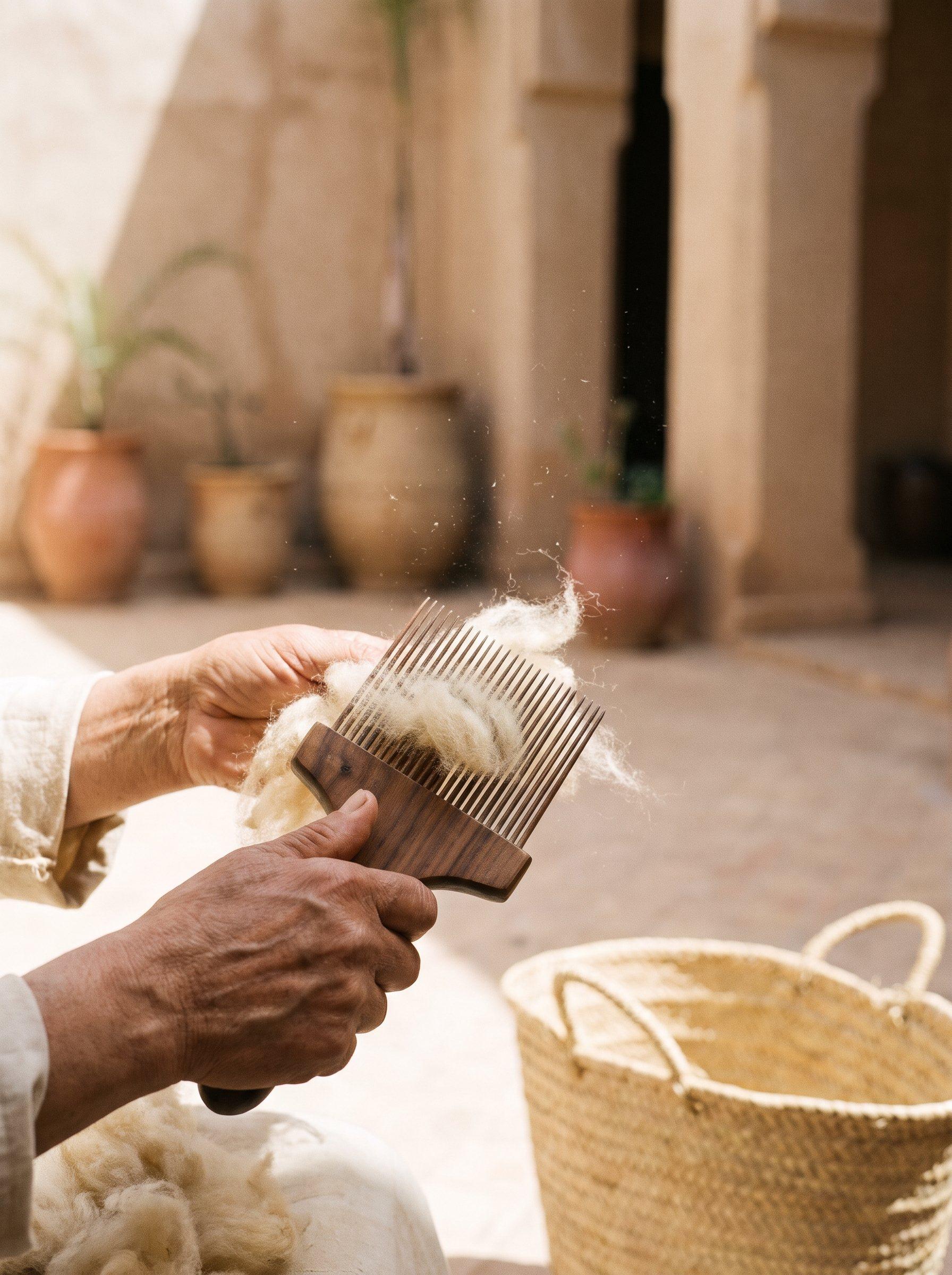
The wool is washed in clear water, sometimes in the river, then dried in the sun on the rooftops. It is then carded: combed between two spiked boards until the fibres align into a light cloud.
03
Spinning
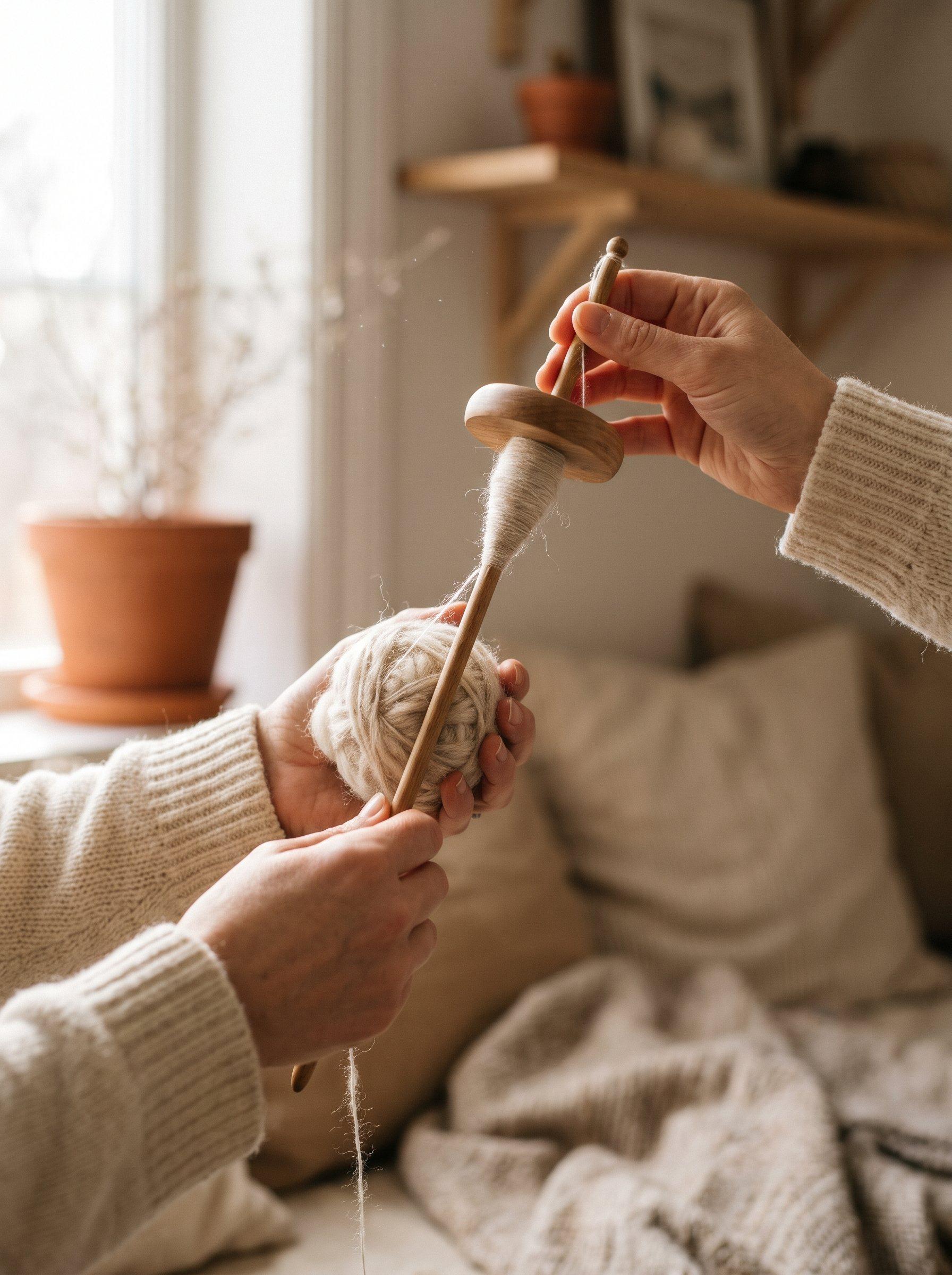
With a drop spindle, the weaver draws and twists the wool into yarn. A tighter yarn for the warp, which will hold the rug; a softer yarn for the knots, which will form its surface.
This irregular, almost living yarn is the signature of a handmade rug.
04
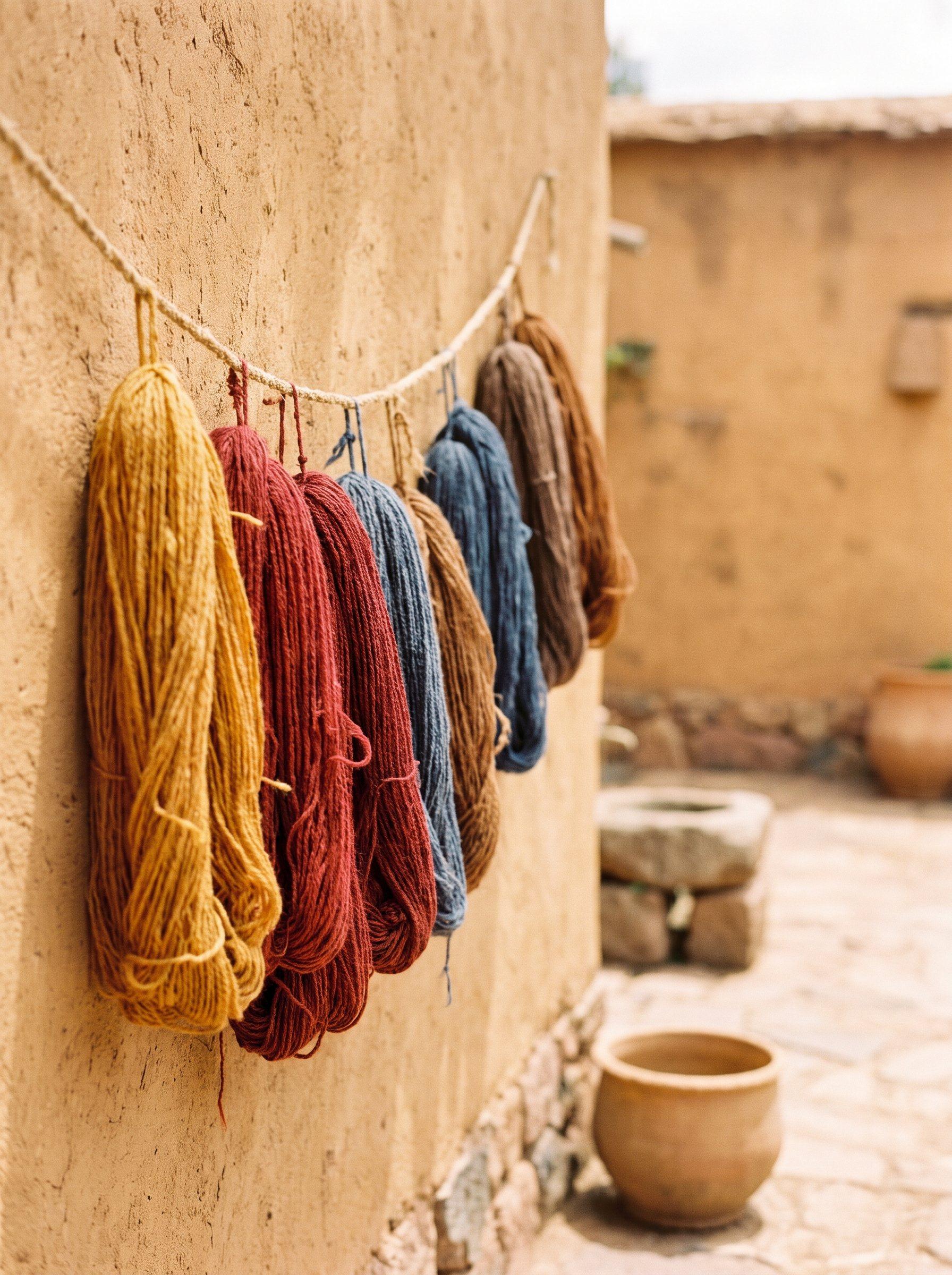
Colours & materials
The Beni Ourain keeps the natural colour of the wool: a creamy white, barely shaded. Only the lines of the pattern are woven in a darker brown or charcoal wool.
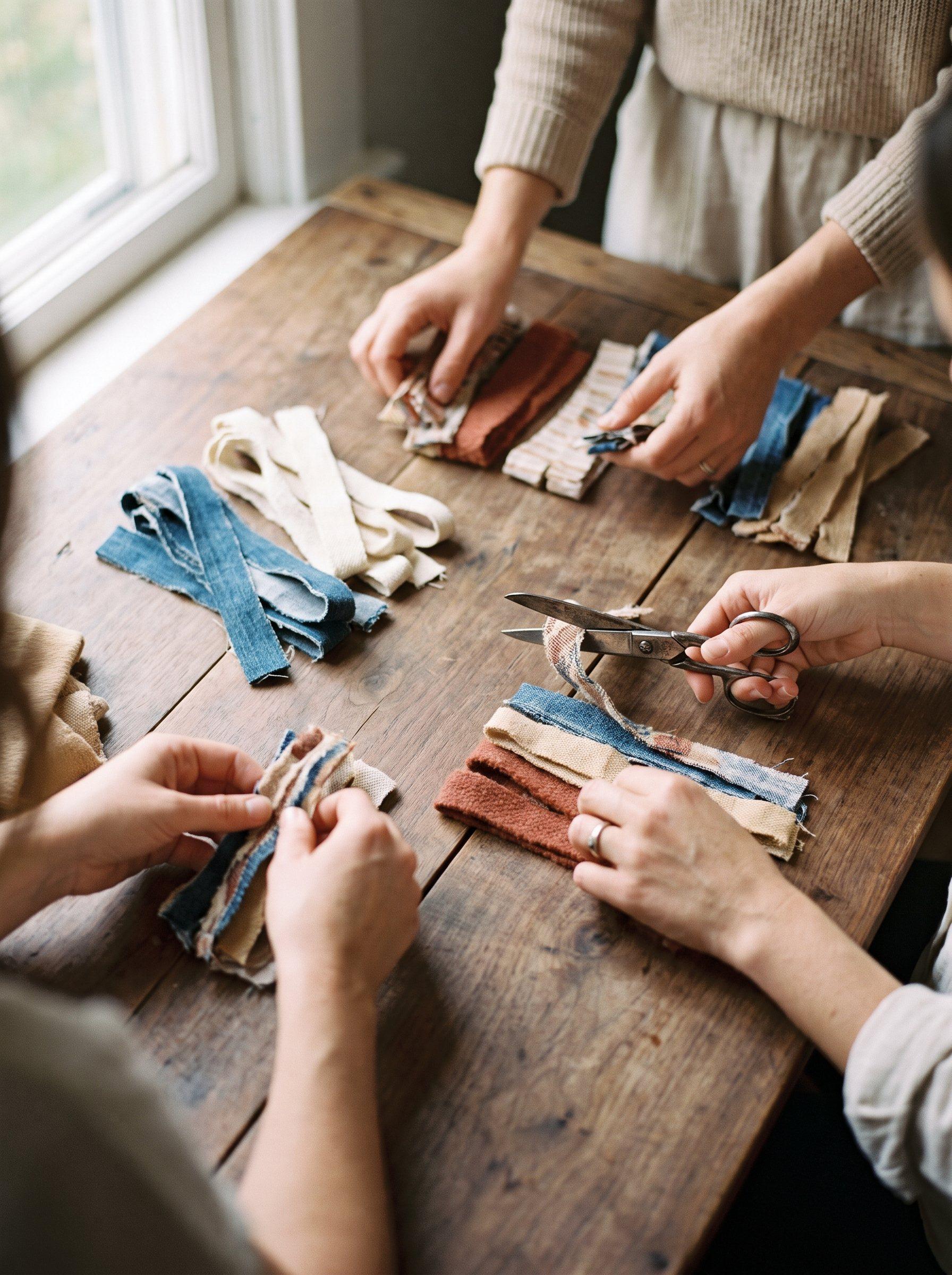
The Boucherouite, on the other hand, is composed with fabric: old clothes and sheets cut into strips, then sorted by colour before they reach the loom.
05
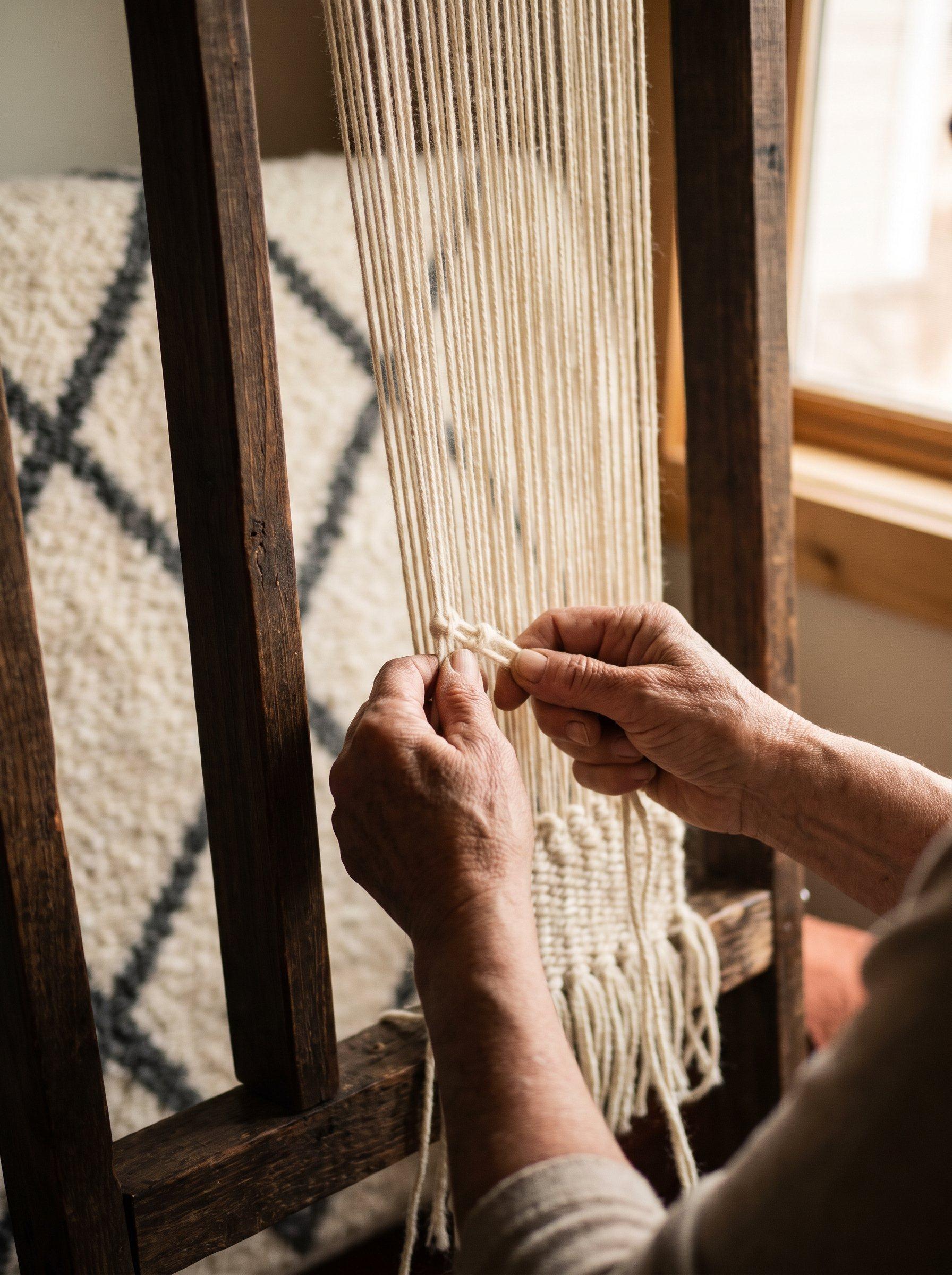
Knotting
On a tall upright loom, the warp is stretched from top to bottom. Seated in front of it, the weaver ties each strand around two warp threads, cuts it, and moves on. After each row of knots, a weft is beaten down with a comb to tighten the whole.
The pattern is never drawn: it comes from memory and from the eye. That is why no two rugs are ever the same.
06
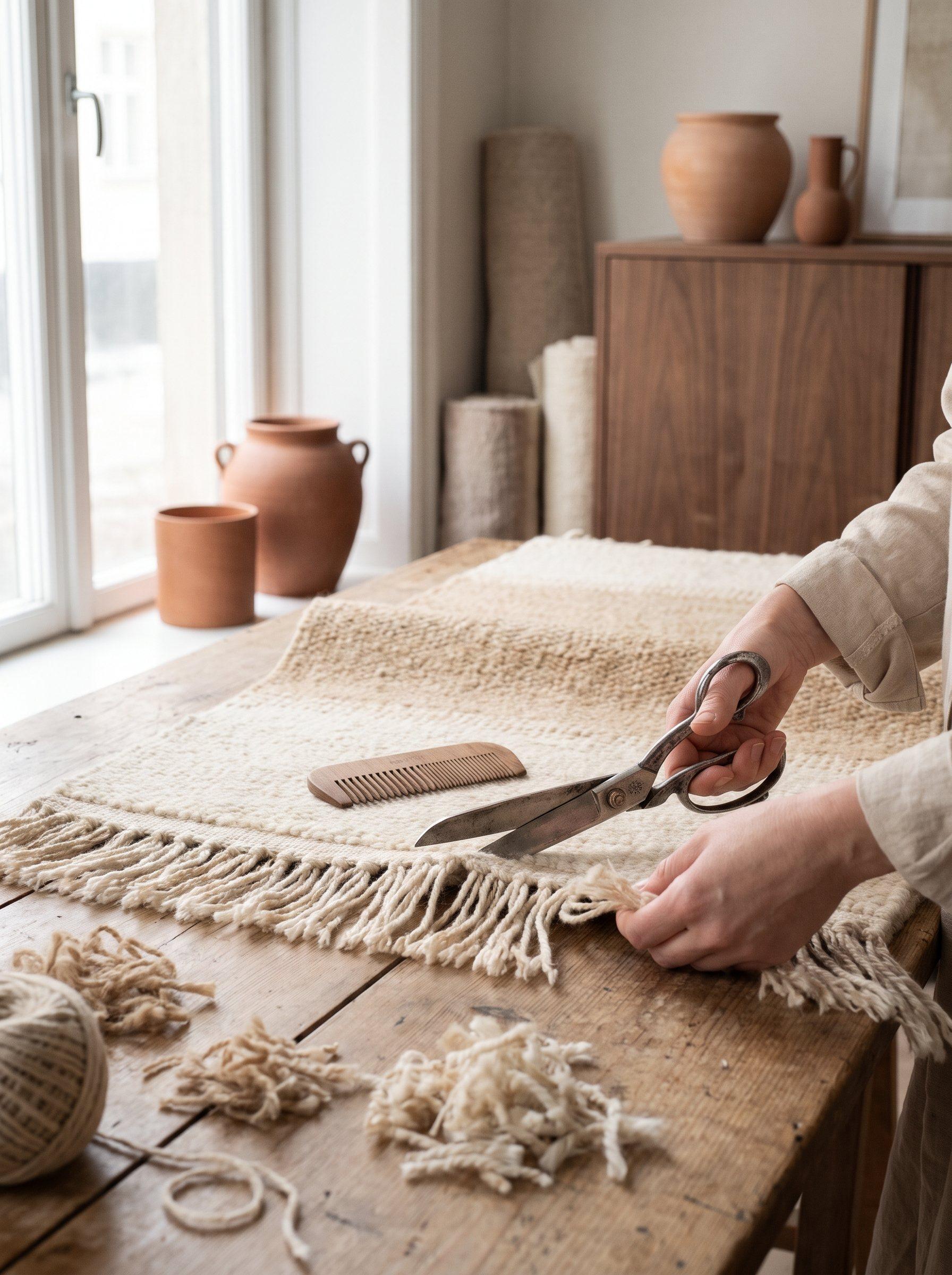
Finishing
Once the rug comes off the loom, the pile is evened out with scissors, the surface is combed, and the fringes are knotted so the knots cannot come undone.
One last wash, a flat sun-dry: the rug is ready to travel.
Boucherouite
A second life for fabric
The Boucherouite was born of necessity: when wool became scarce and expensive in the countryside, women wove with what they had. Worn clothes, offcuts, sheets: everything became material.
That act of reuse gave rise to rugs of wild freedom, where colour is composed as the weaving goes. Every Boucherouite is a piece of improvisation, and a small story of the home where it was made.
A question about how it's made?
Materials, care, lead times: we reply personally.